The Difference Between Sit-On-Top Sea Kayaks And Sit-In Closed Cockpit Sea Kayaks
Here at Cornish Rock Tors our standard sea kayaking sessions use sit-on-top sea kayaks, but we also offer closed cockpit sea kayak courses for those wanting to develop their skills further. But, what is the difference and what are the benefits of each type of sea kayak?

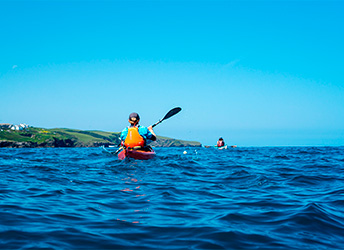
A sit-on top and a sit-inside sea kayak paddling back into Port Gaverne.

Hiring a sit-on-top sea kayak
About Sit-On-Top Sea Kayaks
Sit-on-top sea kayaks are stable, robust, and incredibly user-friendly. They are constructed as sealed vessel and as the name suggests, the paddler or paddlers sit on seats moulded into the deck of the kayak. For novice or recreational paddlers this is more comfortable and more accessible than getting inside a kayak, and there is no feeling of confinement. They’re perfect for our regular guided sea kayak tours, as they’re suitable for people who have never paddled before and users can get on and off them easily which is handy when we’re visiting various coves and secret beaches. You get wetter when paddling a sit-on-top sea kayaks because you’re not sat enclosed within it, and because of that they’ve got holes running through them called scupper holes that allow water that splashes in to drain out. For all of those positive points, sit-on-tops are slower and more cumbersome than their closed cockpit counterparts because they are shorter and wider; they need to be wider because sitting on tops means that the center of gravity is higher and they’d otherwise be prone to tipping their passengers off (which because of the width very rarely happens).

Closed cockpit sea kayaks are longer and narrower – and faster!
About Closed Cockpit Sea Kayaks
Closed cockpit, or “sit-in”, sea kayaks are longer and thinner, with a hole in the middle that the paddler sits in so their lower body is enclosed within the boat. They have developed from the traditional Greenland kayak or “qajak” used for thousands of years by Inuit people from the Arctic. Early forms were constructed from animal (often seal) skins coated in whale fat (to make them waterproof) stretched over a frame made from lightweight driftwood or whalebones. The kayak would be made to measure, so that it would fit the owner perfectly which was essential as they were used for hunting at sea in dangerously cold conditions. Sitting inside the kayak lowers the centre of gravity significantly which means that they can be made narrower (and therefore faster) whilst still being stable. The paddler can also use their legs braced against the inside of the boat for stability, or to lean the kayak over with control for more efficient turning. By bracing their legs against the inside, control, maneuverability and efficiency are all improved. Closed cockpit sea kayaks also have storage compartments at the front and rear allowing them to carry more kit or provisions for longer trips or expeditions. All up, their increased length (water line) and reduced width, plus the efficiencies gained from the paddler’s lower position, make closed-cockpit sit-inside sea kayaks easier to paddle faster and further, making them ideal for proficient paddlers looking to take the next step and explore more. The main reason why sit-inside sea kayaks are craft to work-towards, is the narrower and enclosed nature of them means that if they capsize (roll over) the paddler must be calm, competent and proficient enough to execute a kayak (or ““Eskimo”) roll to right themselves, or be able to get out of the cockpit whilst upside down. They are then harder to get back into at sea, and the paddler needs to be aware of and proficient in the various methods of self rescue techniques, or carry a bilge pump to remove water from inside the sea kayak if a capsize does occur.

A sea kayak expedition along a wild and rugged coast
Why Do A Closed Cockpit Sea Kayaking Course?
As indicated in the above comparisons, sit-on-top sea kayaks are great for novice or infrequent paddlers, or for having fun. Closed cockpit sea kayaks are vehicles for undertaking journeys or expeditions. Therefore if you have your sights set beyond the next headland and want to become a more proficient paddler and be safe at sea, a course that will take you from recreational sit-on-top sea kayaking to paddling a closed-cockpit boat is essential. You’ll not only learn how to adapt your paddling technique to the new craft for increased speed and efficiency, but we’ll teach you about route planning, tides and weather forecasting to keep you safe on your future expeditions. As part of the safety element of the course and certification, you’ll also learn how to avoid capsize and how to roll your kayak in order to right it if it does happen, and how to effectively tow another kayak. We teach all of this through practical experience, over the course of several longer paddles along different stretches of coast.

Sea kayaking the south coast, past St Anthony Head lighthouse
The shoulder seasons either side of “high summer”, particularly the autumn, are great times to level-up your sea kayaking. Not only do we have more availability but the coast is quieter and it’s a great time for spotting wildlife along our coasts. Those early Inuit hunters chose the sea kayak because it was silent and allowed them to get close to their prey, and whilst all we want to do is watch and observe, the same silent qualities of sea kayaks and their ability to take us to remote and wild stretches of coast are just as beneficial to us today.

Setting out through The Gut on an expedition up the Cornish coast
Because our advanced and closed cockpit sea kayaking courses often run across multiple days and routes are selected based upon sea and weather conditions, it’s absolutely the sort of thing that is best organised over the phone. Get in touch if you’d like to find out more and to discuss availability and dates!