What IS Coasteering?
‘What IS Coasteering?’ is a question that we get asked a lot. And it’s a good question, because coasteering as an adventure activity is still quite new, and is a combination of different pursuits. In this article we’ll explain exactly what coasteering is and how we run our coasteering sessions, and answer some other frequently asked questions, so that you can book with confidence this summer.
Exploring The Intertidal Zone
Coasteering Is…
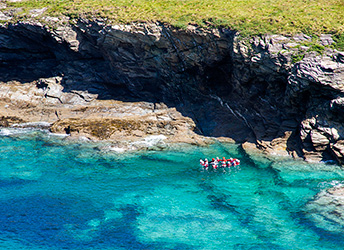
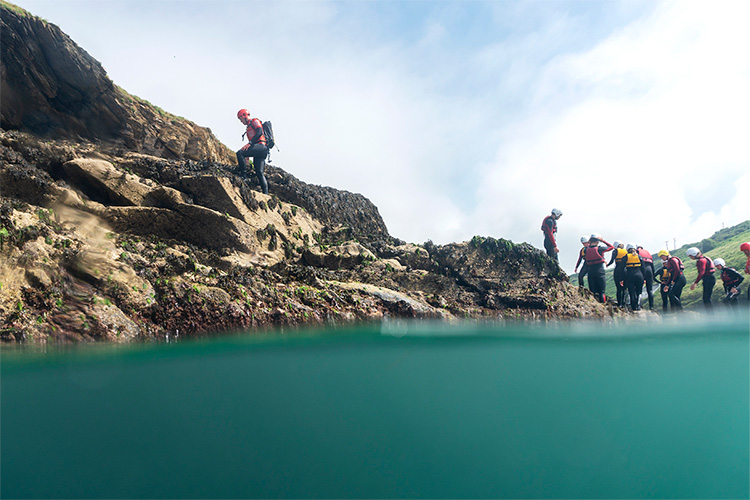
Coasteering is a journey along the coast at sea level, in and out of the water, exploring and enjoying various natural features along the way. We move along the bottom of the cliffs between the low and high tide lines (the intertidal zone), swimming, walking and sometimes traversing (sideways climbing), stopping at various predefined points to explore sea caves, swoosh through wave features and jump from the rocks into the sea. The routes that we take and the features along them change with the tides – a small jump that we practice on the way out, can be a much bigger jump by the end of the session on the way back once the tide has dropped out. The routes are otherwise inaccessible – the only way that you can get to and explore these stretches of the coast is this way – member of the public can’t get there, so you can feel a long way from the busy beaches.

Leading By Example
The Jumps
Coasteering is way more than just the jumps. Although, they’re admittedly a really fun and very eye-catching element of it, and the thing that most people think of when coasteering is mentioned. So, we’ll talk about those first!
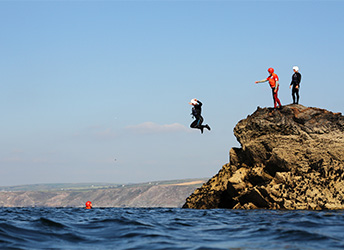
Jumps are a really fun part of coasteering and something that definitely attracts a lot of people to try it. We have set jump locations that we can choose from along our routes. These are jumps that we discovered and tested (checking the depth using a plumb line so we always know how deep the landing is at any stage of tide, diving with a mask on to check for underwater obstacles etc) almost two decades ago, and that we’ve been taking clients to ever since. We start each session with small jumps, teaching and practising technique so that when we get to higher jumps later on technique is dialled in and so is your confidence. The important thing with all of the jumps on our coasteering routes however, is that they are all entirely optional – you don’t need to do a jump to get to the next part of the session, so if you don’t like the look of it and want to sit that part of the session out then you absolutely can do.
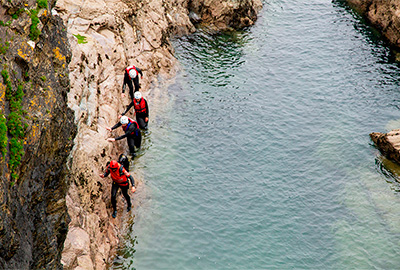
Traversing Challenges
Traversing Challenges
To move between features on a coasteering route, groups swim or walk across the rocks exposed at low tide. At some places, rather than swim, we can use traversing challenges. Traversing is climbing sideways at a low level along a stretch of cliff, often with your feet still in the water. It’s quite technical (especially whilst wearing wetsuit boots!) but there’s no distance to fall if you come off, and you land in the water.
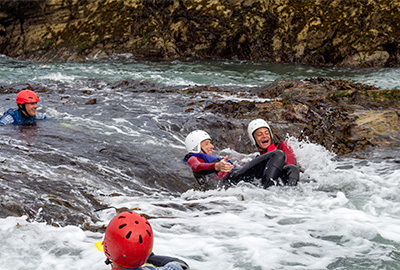
Water Flume!
Wave Features
In some places along the coast there are places where the waves wash over a smooth slope of rock into a pool, or where waves will wash around inside a large indent in the rocks in a predictable way. When the conditions are right, we use these wave features in our sessions to have fun sliding, swooshing, or simply getting washed around by the waves.
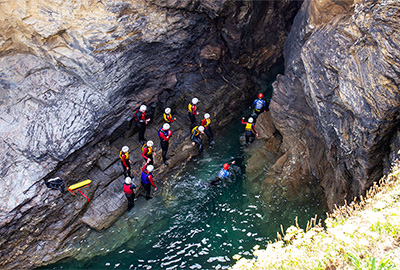
Exploring Caves
Sea Caves
There are some incredible sea caves here at Port Gaverne. Some open up into huge chambers, some connect up so you can go right through from one cave and come out in another, and others are havens for some really interesting sea creatures. We first explored these caves in the early 2000s before setting up Cornish Rock Tors, using torches and glow sticks to chart them and decide which we could lead groups into and which states of tide. Over the years we have made some great discoveries, including finding rare scarlet and gold cup corals (a type of cold water coral) in one of the sea caves here whilst guiding a team from Cornwall Wildlife Trust on a survey session.
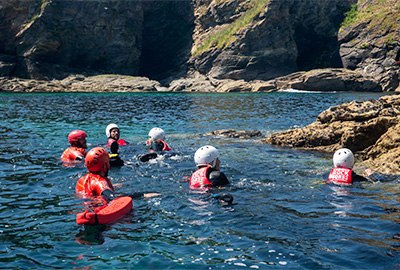
Getting From A to B, In The Sea
Sea Swimming
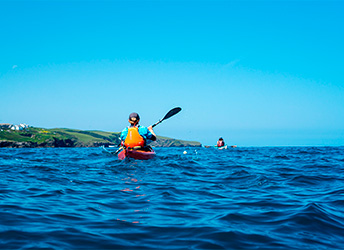
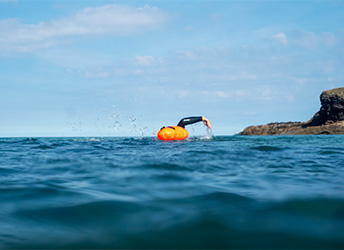
Part of the journey along the coast in a coasteering session involves swimming, albeit at a leisurely pace whilst wearing a buoyancy aid. Certain sections of our routes can’t be walked or traversed even at low tides, and so we swim between the different features and sections. A lot f the fun of coasteering is simply being out in the elements, away from the busy beaches and holiday crowds, and swimming short distances along these stretches really reinforces that.
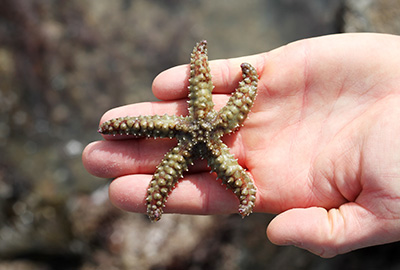
Spiny Starfish
Marine Biology and Rock Pooling
Coasteering isn’t just about adventure and adrenaline, it’s also about enjoying and learning about the amazing natural world that we have on our doorstep (coastline). Coasteering routes pass along, over and through incredible marine habitats such as rockpools, caves and tidal undercuts, where we can often find some really interesting marine life such as star fish, crabs, blue rayed limpets, jellyfish, amazing seaweeds and maybe even cold water corals. Our coasteering guides are all super enthusiastic about the marine environment and are incredibly knowledgeable, and are always all too happy to show you what they find.
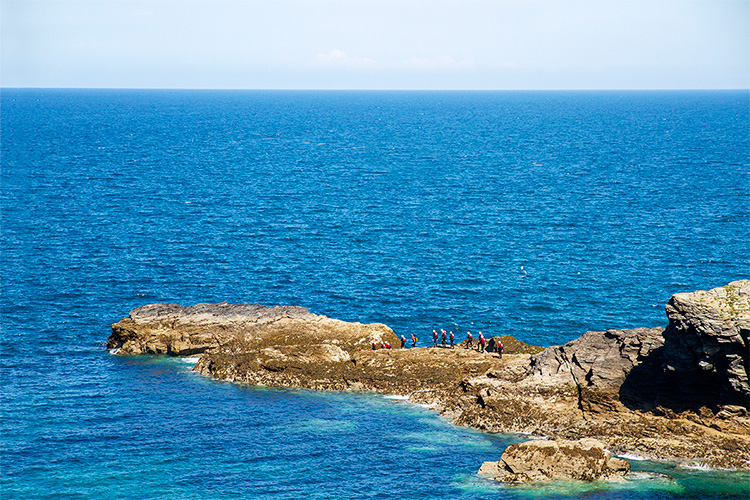
Exploring Castle Rock
Is Coasteering Safe?
This is often another question that activity providers get asked once people know what coasteering is, and it’s one that we’ve answered previously in a dedicated article. We have worked incredibly hard for the past 19 years to ensure that the activities that we offer (in particular coasteering) are as safe as they possibly can be when operating in a dynamic natural environment. Few things in this life are entirely free of risk, whether it’s playing rugby, crossing the road, or coasteering. It is these risks, some real and some perceived, that make adventure activities like coasteering exciting and that provide people with a challenge and sense of achievement.
We operate to the highest standards set out by our industry, we plan and train for all eventualities, and we adapt every coasteering session to suit the members of the group and their abilities or levels of comfort and confidence.
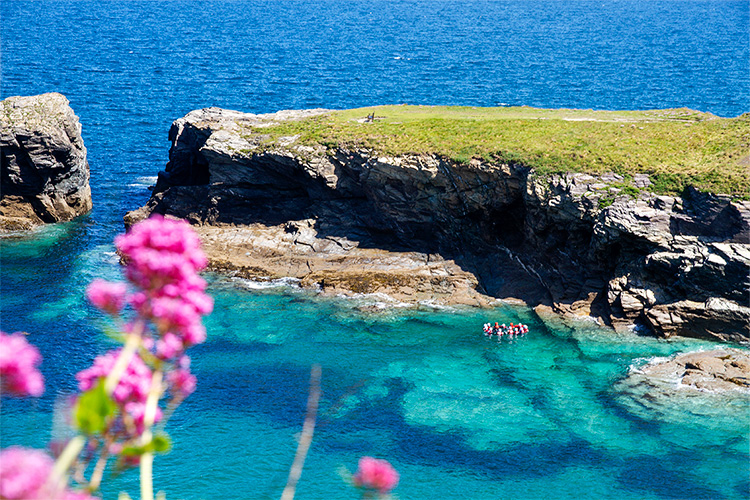
Huddle Up!
Coasteering in Cornwall with Cornish Rock Tors
Now that you know more about what coasteering is, and what you can expect when coasteering with Cornish Rock Tors, we hope that you’ll be excited to book a session with us. If any outstanding questions though, then please do get in touch with us and we’ll be happy to answer them. We’ve been guiding people and sharing adventures on the Cornish coast for almost two decades now (we turn twenty next year!), we have a lot of badges and accreditations to show for it, and we believe that we’re the best at what we do. We’d love to prove that to you.