Fact File: Fulmar (Fulmarus glacialis)
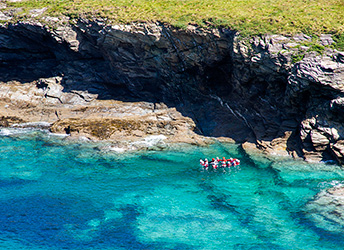
The high cliffs just north of the cove here at Port Gaverne, where many of our favourite coasteering features are located, are also a popular breeding site for northern fulmars. During the summer months you can often see these beautiful birds soaring at high speed in mesmerising patterns on the updrafts in front of the cliffs.
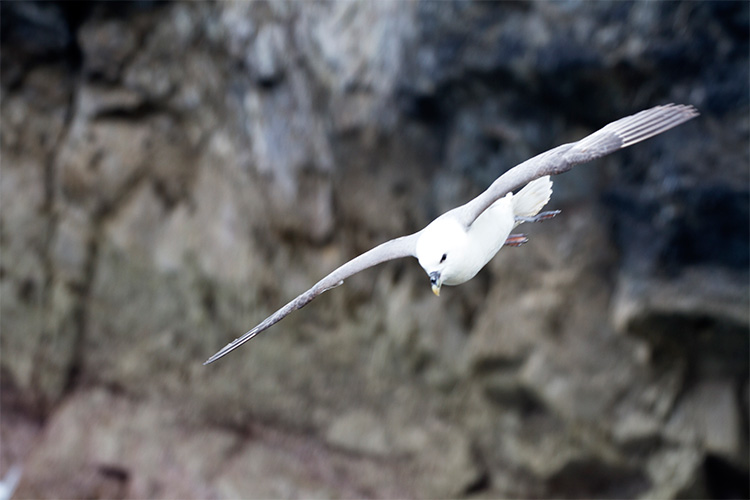
Fulmar flying beneath the cliffs
Fulmars are related to the albatross. They are pelagic birds, meaning that they spend their entire life at sea apart from when breeding. From a distance fulmars are often initially mistaken for gulls because of their grey and white colouring, but can be easily distinguished by the way that they fly, using their large, straight, stiff, wings that span over one metre wide to glide and only using shallow wing beats. They are tube-nosed seabirds in the bird order Procellariiformes that ranges in size from the enormous albatross down to storm petrels that are only a little larger than sparrows.
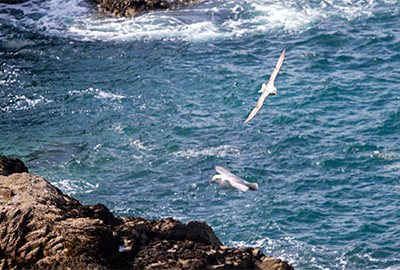
Banking
How The Fulmar Got Its Name
Fulmars get their name from the old Norse for foul gull (full = “foul” and mar = ”gull”), in reference to their resemblance to gulls and their habit of spitting a pungent stomach oil at any predators. This oil has two purposes; when spat at predatory birds it will coat their feathers and inhibit their ability to fly (which can be fatal in seabirds), but it is also an energy rich food source that they can use on long flights or to feed to their young. The other thing that a fulmar often spits out is concentrated saltwater. Because of the way that they feed, fulmars imbibe a lot of seawater and they have a special gland behind their nose to remove salt from their system, which is then expelled through the tube in their beak.
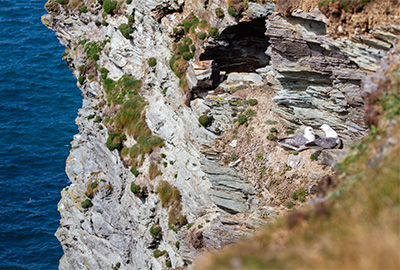
Nesting on the cliffs
From The Scottish Isles To Cornwall
Fulmars were historically recorded in the greatest numbers on St Kilda and the rocky islands off the north and west coasts of Scotland and in the subarctic region of the North Atlantic. Throughout the 1700 and 1800s they were hunted for food and for their stomach oil that was used as both medicine and fuel. On St Kilda fulmars were the primary food source for the local population and it was estimated as late as the 1950s that over 12000 were caught and consumed each year – that’s over 100 birds per person for the island’s population.
Since the 1800s when they were only known to nest on a small number of Scottish islands, fulmars have gradually expanded their range and are now found all around the coast of the UK wherever there are suitable cliffs to provide nesting sites. There are now estimated to be around 500,000 nesting pairs all around the UK and 1.6-1.8 million fulmars spend winter in British coastal waters.
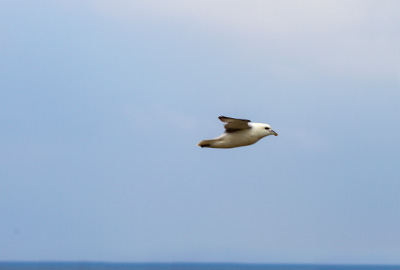
Built for speed
Spotting Fulmars At Port Gaverne
If you stand on The Main it is possible to spot our resident fulmars by watching for their repetitive flight patterns gliding on stiff wings against the cliffs to the north. The fulmar is a fast birds with an average flight speed of 47km per hour, and they look as though they are built for speed with their large wings and thick neck. Once you start looking for them, it is quite easy to differentiate them from the herring gulls. If you’re lucky you may see them diving for fish – they have an incredibly good sense of smell and use the smell of fish oil on the surface of the sea to locate and target their prey. This also means that they have developed a habit of following fishing boats in the hope of an easy meal of fish waste or discarded by-catch.
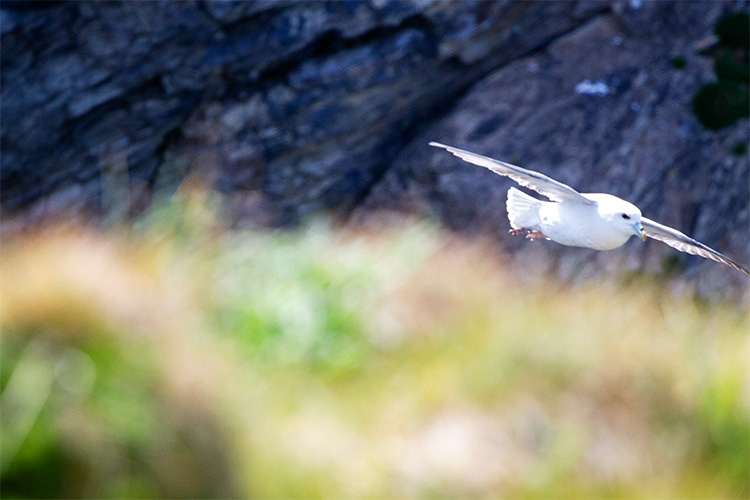
Flying level with the coast path
If you’re visiting Port Gaverne this summer then keep an eye out for our majestic fulmars, and celebrate this wonderful seabird success story.