Fact File: Harbour Porpoise (Phocoena phocoena)
Harbour porpoise are small, shy, cetaceans (the group of aquatic mammals that covers whales, dolphins and porpoises) that we sometimes see around the coast of Cornwall.
Harbour Porpoise are relatively common (more so than dolphins in northern Europe) and live in cool and shallow coastal waters around the North Atlantic and North Pacific. Most sightings occur within 10km of the coast, hence the name “harbour” porpoises. Harbour porpoises are however shy creatures and will avoid motorised boats which, when combined with their relatively small size (they can grow to about the same size as an adult human), means that they are difficult to spot. As a result, they are one of the amazing creatures living in the seas off our coast that few people know much about.
At the start of last winter, whilst out on the water for leisure and pleasure (rather than leading a guided trip), we were lucky enough to see some of the harbour porpoises who we share this stretch of coast with.
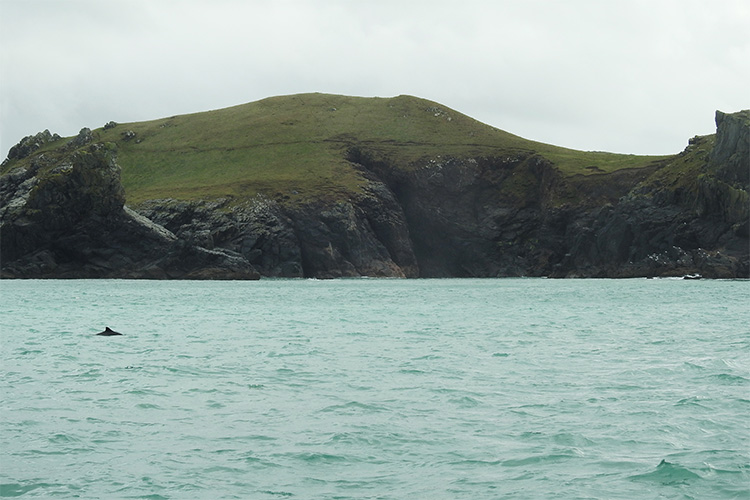
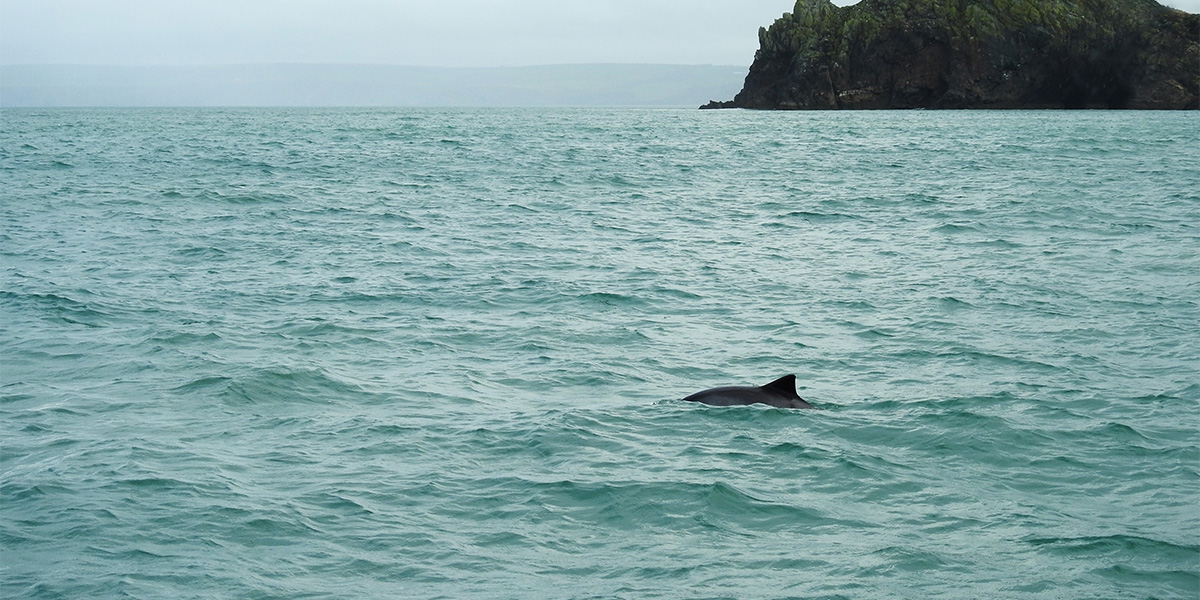
A single harbour porpoise off the coast of North Cornwall
Harbour porpoises are one of seven species of porpoise; they can grow to be between 1.8m (male) and 1.9m long (female) but are normally around 1.5m long and stocky, with a small triangular dorsal fin on their back. Usually this small fin is all that you will see, as harbour porpoises very rarely “breach”, or jump fully out of the water (ironically, this action is also referred to as “porpoising”). Unlike dolphins, harbour porpoises don’t have a beak and have a more rounded head with more of a snout, which could explain why they are also sometimes called a “puffing pig” – the puffing referring to the snort or sneeze-like sound that they make when they break the surface to breathe.
Unlike dolphins who live in social and family pods, most harbour porpoises live on their own (like the ones that we saw) or in small groups of 2-3 (the small groups tending to be a mother and calf, perhaps also with a year old juvenile). Sometimes they come together in larger groups if there is a particularly abundant food source. They food constantly; because they are warm blooded and quite small they have a fast metabolism and must eat a huge amount of food, usually smaller schooling fish such as herring, mackerel and sand eels, as well as sometimes preying on larger fish or squid and octopus. Their need to eat lots of fish is what brings them into contact with humans most often as they search for food I the same places that fishing boats do. Sadly it was estimated in a recent study carried out by WWF and Sky Ocean Rescue that over 1000 harbour porpoises are killed in UK waters each year (that’s an average of three each day) most often when caught as by-catch in gill nets.
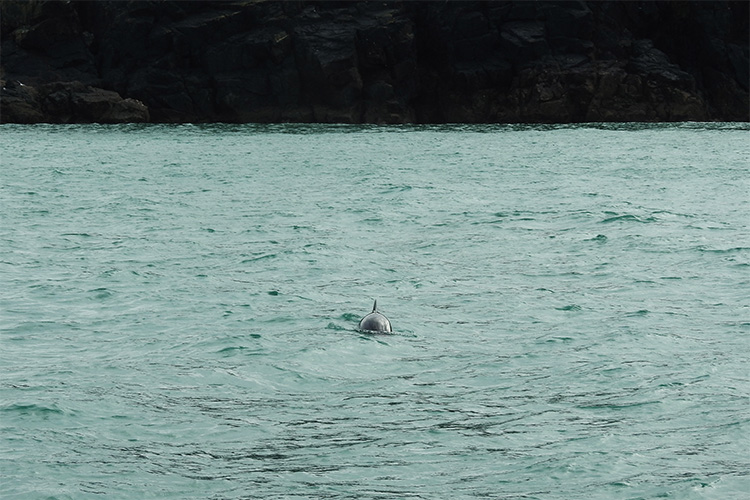
About as close as you’ll get to a harbour porpoise in the wild!
If you are in Cornwall and are fortunate enough to spot a harbour porpoise then keep your distance (if you’re in a boat, then stay at least 100 metres away and cut your engine if safe to do so, to avoid disturbing or scaring the harbour porpoise) and please report your sighting to Cornwall Wildlife Trust. If, unfortunately, you come across a dead or stranded harbour porpoise on the shoreline then call the Marine Strandings Network immediately on 0345 201 2626.