Is It A Cormorant Or A Shag?
Cormorants and shags are both species of the cormorant family found here on the coast of Cornwall. Both are excellent underwater hunters, and unless you see a cormorant stood next to a shag and are able to do a direct comparison, it is often really difficult to tell them apart, especially from a distance. So what do they look like, and how do you tell what you are looking at?
Fact File: Cormorants (Phalacrocorax carbo) and Shags (Gulosos aristotelis)
Both birds are large and dark, with long bodies, long necks and broad wings that they fold in tight to their bodies when swimming under water and then hold out to dry when stood on rocks.
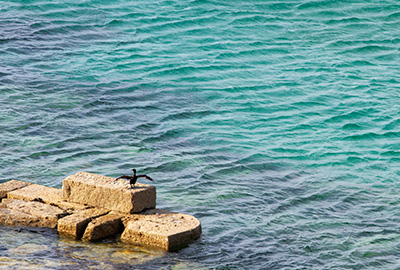
A shag drying its wings.
Cormorants and shags are both divers, propelling themselves underwater from the surface to depths of up to 20 meters in the case of cormorants or up to 40 meters for the smaller shags (which are also slightly messier divers that make a splash as they duck under the water), using their webbed feet to kick and chase after fish underwater. They have long necks to help them reach, and long hooked bills for grabbing fish. Neither of these birds have waterproof plumage, so their feathers become waterlogged to allow them to dive easier and for longer, and they have denser bones and less body fat than other sea birds, also to assist them in staying underwater. This means though that their fishing sessions only last for about half an hour before they need to return to shore to dry their feathers and warm up – this is why you often see them perched on a rock with their wings held out in a very recognisable “cormorant” pose! It’s also why both species look miserable when it rains!
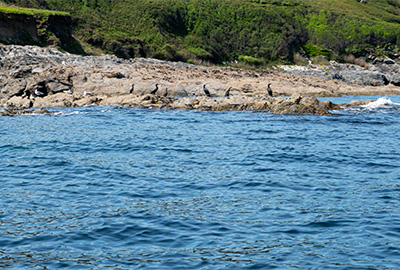
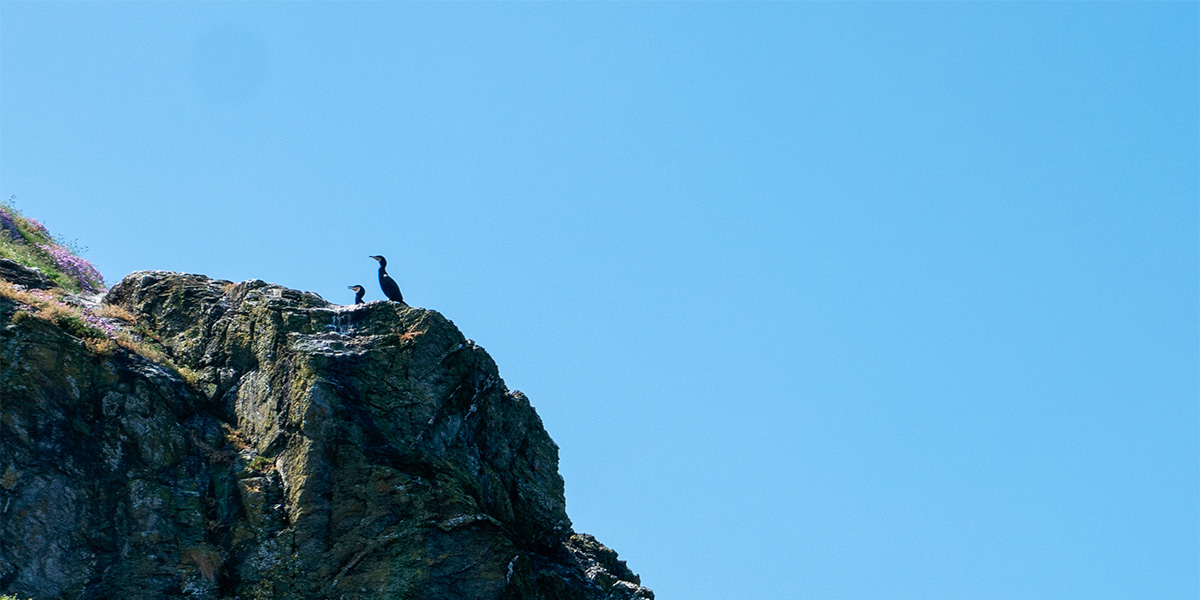
Cormorants and shags sharing a rock on the south coast of Cornwall.
You will only ever see shags on the coast, whereas cormorants are also found on inland waterways. So, if you’re at a lake inland and you are wondering whether you’re looking at a cormorant or a shag, it’s a cormorant.
Shags are slightly smaller than cormorants, growing up to 80cm tall whereas cormorants may reach 1m in length. They often appear dark green, with a yellow patch at the base of the beak and a characteristic crest on the top of the head – shag is an old name that means “tufted”. Cormorants have shiny black plumage and a white area behind the beak and, during breeding season, on their thigh.
There are estimated to be fewer than 9,000 breeding pairs of cormorants resident in the UK, whilst almost 65,000 over-winter here, making the British Isles an internationally significant habitat for them.
Shags are more populous in the UK, with around 17,500 breeding pairs and over 110,000 birds spending the winter here. That accounts for around half of the world’s population. However, more than half of those breeding pairs are limited to just 10 locations and they typically stay within 100-200 km of their breeding grounds. This limiting factor has caused them to have red conservation status in the UK, meaning they are one of the bird species most in need of help and protection.
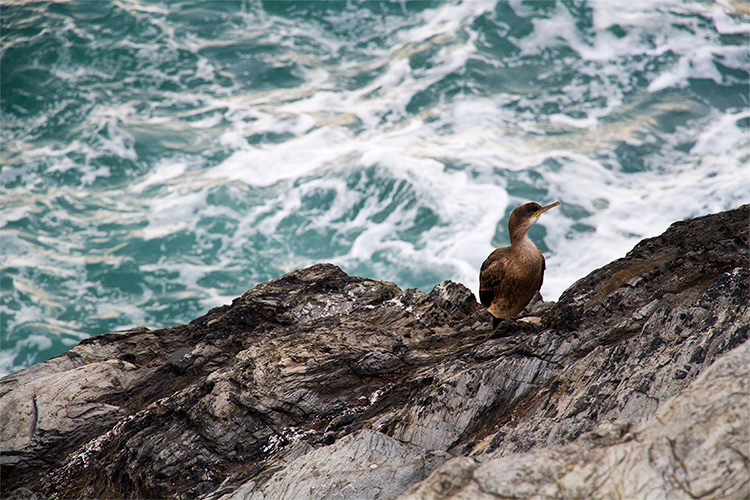
Juvenile Shag
The trouble that we have when identifying these birds is that there is a greater population of shags, however cormorants are more familiar and widespread. That’s fine if you spot a cormorant inland (positive ID) or during breeding season (the white patch on the thighs and under the chin gives a positive ID), but not if you are on a coast where both occur. In that instance, statistically, you are more likely to be looking at a shag.
Good luck!
Click here to read more Fact File articles about the fantastic wildlife that we often spot on our sea kayaking, stand-up paddleboard and coasteering trips.