Fact File: Razorbills (Alca torda)
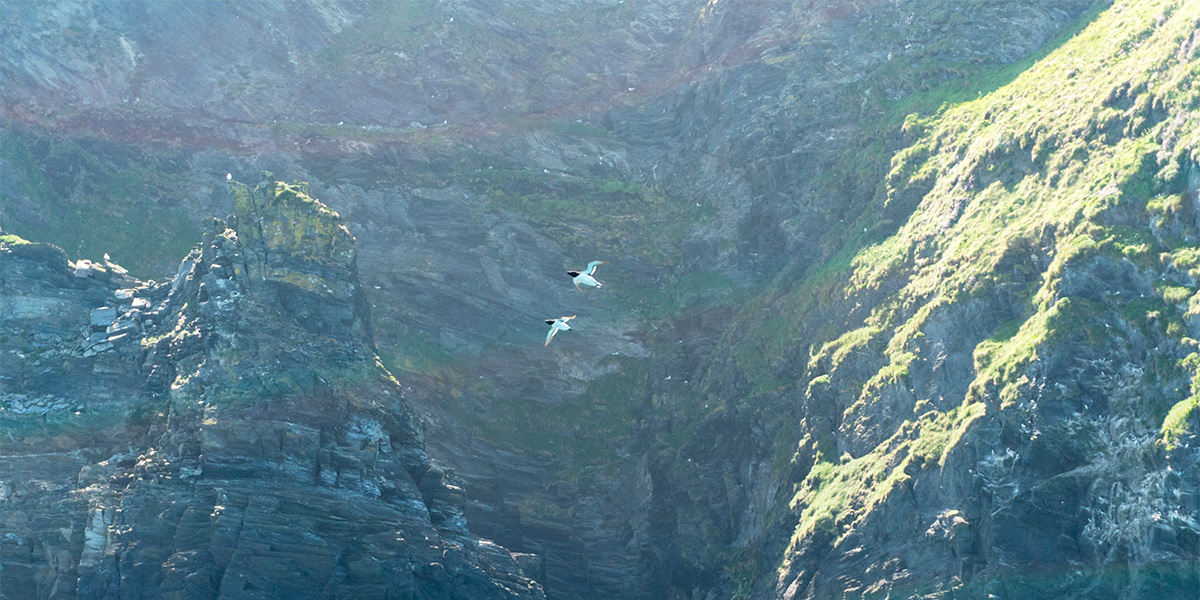
Between March and the end of July, the high sea cliffs around Port Gaverne are a noisy riot of nesting seabirds. Amongst our favourites are the stocky little black and white razorbills.
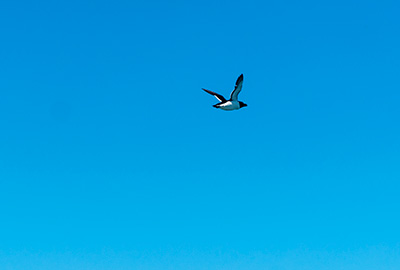
Razorbill on the wing
Razorbills are medium sized seabirds from the auk family that are just under 40cm long (or tall, when they stand up), with black backs and whit breasts so that when seen flying they are black above and white below. They can look similar to guillemots, however razorbills have a distinctive short, thick, black bill with thin white stripes across the end. They are resident around the northern and western coasts of the British Isles, and during the early summer months they come ashore to breed and nest on coastal cliffs in large colonies, before returning offshore for the rest of the year. During the winter their plumage changes and their white breast feathers move up onto their face giving them a noticeably different appearance, however few people see them through the winter as they tend to remain offshore.
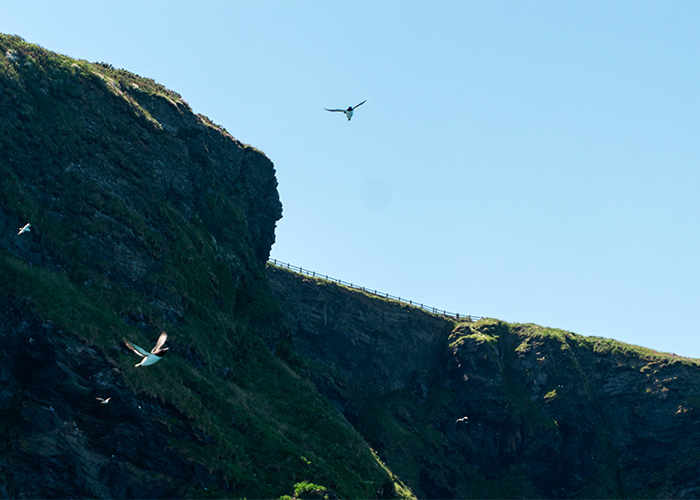
Between the coast path and the sea
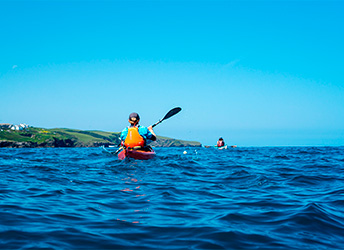
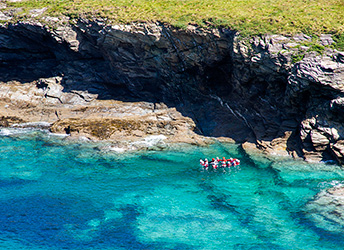
Razorbills nest on low ledges and amongst rocks at the bases of cliffs, rather than higher up. For this reason, their nesting colonies are usually on remote cliffs away from the risk of any human interference. Along the stretch of Cornish coast north of our base at Port Gaverne, where our sea kayaking and stand-up paddleboarding tours quietly paddle, the cliffs are high and other than our small groups and the occasional hiker on the south west coast path above, there is little to disturb the seabirds. Here, the razorbills shoot away from the cliffs, flying in straight lines out to sea to go hunting for fish. They do this by diving down from the surface of the sea and swimming underwater, just like the penguins that they don’t look dissimilar to. Their normal range for catching fish is within the top 20 meters of the sea, however they have been known to dive much deeper than that in search of food.
Razorbills are listed as Near Threatened on the global IUCN Red List of Threatened Species. And have amber status under the Birds of Conservation Concern 4. They are protected by The Wildlife and Countryside Act 1981. Like many other seabirds, the health of razorbill populations is linked to the health of the marine environment, with immediate and direct threats coming from marine pollution, ghost gear fishing nets, and loss of food sources from overfishing, and longer term threats in the form of the impact of the climate and ecological crisis on sea temperatures and acidification (affecting their food sources) and the increased violence of winter storms threatening these species that spend much of the winter at sea.
There are estimated to be around 130,000 breeding pairs of razorbills around the coast of the UK, and overall over seven million seabirds nest here every year. Our coastline is incredibly important for seabirds and their place in the marine food web. You can find out more about and donate to the RSPB’s Sealife Guardians campaign here, which is campaigning for a faster roll out of Marine Protected Areas around the UK and to include protection for seabirds and other important marine wildlife in MPAs.