Supporting Seabirds
In autumn 2023 the most recent State of Nature Report was published, detailing the current status of the UK’s biodiversity, including on our coasts and in our seas.
It doesn’t make for uplifting reading. Like most countries worldwide, the UK’s plants, animals and fungi are continuing to decline and we are now one of the most nature-depleted countries on Earth. It’s time to do something about that.
These reports come out every three years or so, and are produced through a collaboration of over 60 partners, including the likes of the Marine Conservation Society, the RSPB, the Wildlife Trusts, WWF and ORCA (who monitor whales and dolphins).
On the marine side of things, both fish stocks and the health of everything that relies on them, such as sea birds, have been in steady decline. The RSPB’s latest seabird census revealed that almost half of the UK’s breeding species have declined over the past twenty years – the same period over which the well-monitored species of fish that live on or near the seafloor have been in decline.
The numbers of 13 species of seabird have fallen by an average of 24% since 1986. 24 out of our 25 breeding seabird species are at risk of local or global extinction, and these figures pre-date the 2022 outbreak of avian influenza that saw dead seabirds being washed ashore onto beaches around the coast.
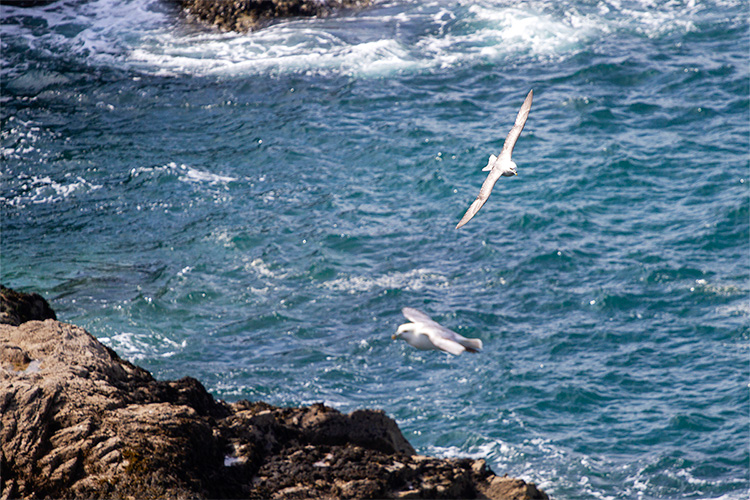
A Pair of Fulmars
Seabirds Around Cornwall
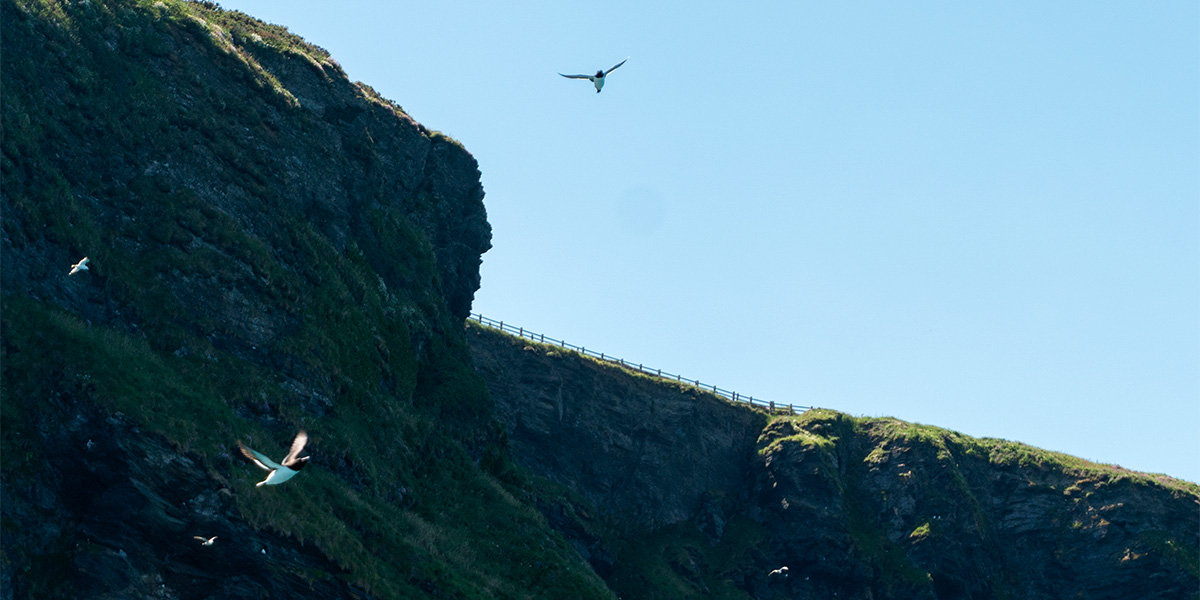
Between early spring and summer (roughly April to August) the cliffs around Port Gaverne, particularly heading north up the coast where it is more remote, are home to breeding colonies of seabirds – many with their own patches that they return to year after year. There are fulmars that glide and soar around the cliffs of Tridents and across The Main, the gulls of Cartway Cove, and large colonies of nesting razorbills and guillemots further up the coast, to name but a few. Further out in the bay we see gannets diving in the distance, and there are often puffins too although they’d be hard to spot. And whilst we may see (and hear!) lots of these seabirds along the cliffs during the early summer, there are less than there used to be or should be. Why is that?
The Threats Faced By Seabirds Around The British Isles
“Seabirds need three things: safe places to breed, safe places to feed, and plenty of food. In all three areas, we are failing them.”
– Samuel Wrobel, RSPB Marine Policy Officer
Seabirds spend most of the year out at sea – often hundreds or even thousands of miles from the coast of Cornwall, depending on the species. When they come ashore to breed they return to large tightly packed colonies on steep cliffs and remote islands. Diseases, such as the recent deadly strain of bird flu, can spread through these colonies unbelievably fast with devastating effect on populations (in 2022, bird flu killed 7% of the world’s Great Skua population). These populations take years to recover. In many places, particularly on islands, invasive predators such as rats raid nests and burrows and eat the eggs and chicks, although successful programmes to remove them are being put in place – rats have been eradicated from Lundy Island, visible on a clear day fifty miles or so up the coast from here, and seabird numbers there have since tripled.
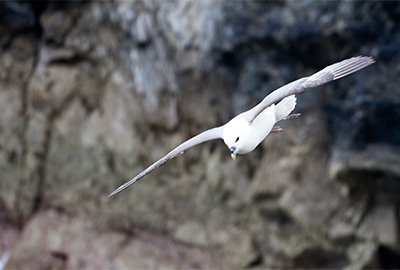
Fulmar
Seabirds feed at sea (with the exception of several omnivorous gull species, some of which have also developed a taste for chips and ice creams in coastal towns). Humans have made the sea a far more hazardous place for seabirds over the last half a century or so, since demand for fish has increased and our methods of fishing have become more industrialised. Seabirds often get tangled in nets and lines as bycatch. A 2020 study of the UK registered fishing fleet by the Scottish Ocean Institute at the University of St Andrews estimated that each year between 2,000 – 9,000 fulmars die from entanglement in the offshore longline fishery and between 1,800 and 3,300 guillemots are caught by static net fisheries. Cormorants and Gannets that dive for fish are also often trapped and die from entanglement in fishing gear, though not in such high numbers.
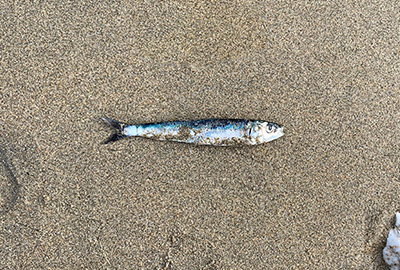
Small Sardine Washed Up On The Beach
More seabirds may be dying as bycatch of the fishing industry not only because there are now more nets and lines for them to get trapped in, but because an overall decline in fish stocks and their wild source of food is driving them to scavenge around the fishing boats.
Overfishing and climate change are decimating fish stocks, including those of small “forage fish” that sit lower in the food chain and which many seabirds feed on. These aren’t overfished for human consumption directly, but often to be processed into fish oil and fish meal to feed to farmed fish (such as salmon).
Oceana UK’s 2023 report into the state of UK fish populations found that more than a third of stocks are being overfished, and that a quarter are at a critically low size.
“Continued exploitation exceeding sustainable limits not only puts fish populations at risk, but also everything that relies on them.”
– Oceana UK
Ending overfishing, setting sustainable catch limits, and phasing out destructive fishing methods such as bottom-towed trawling and dredging are all actions that the UK government needs to take for the health of our oceans and everything and everyone that relies on them.
Over in the North Sea a ban on industrial fishing for sand eels in English and Scottish waters came into force on April 1st following a campaign led by the RSPB. Sandeels are one of the forage fish that loads of other fish and seabirds feed on, most famously puffins whose populations have been plummeting because of their struggles catching enough sandeels to feed their young.
The impacts of the climate crisis, such as marine heat waves (which we experienced in the UK last summer) stress the entire ecosystem, from the plants, algae and plankton at the bottom of the food chain through to the large fish, mammals and sea birds at the top. Many of the impacts of this are invisible to us humans, with the exception of the life above water that we can see – the seabirds.
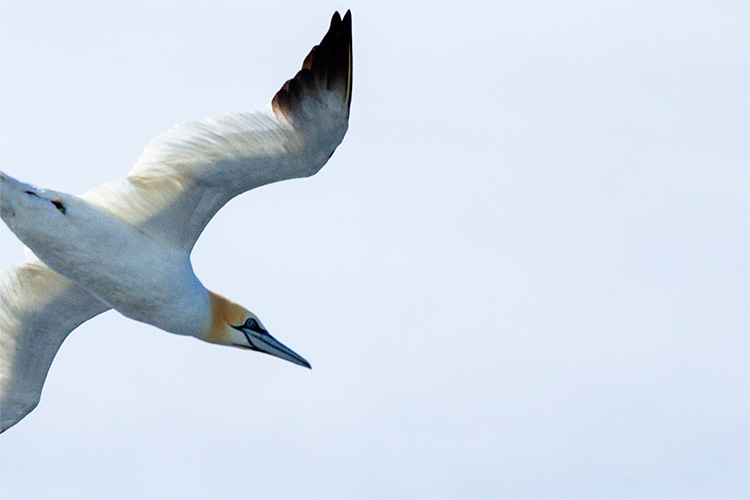
Northern Gannet
Hope and What We Can All Do To Help
When faced with a crisis like this, it is most helpful to have hope and to be optimistic. There are amazing examples of the power of nature to rebound and recover, and of how ordinary people can effect positive change. The ban on trawling for sandeel in the North Sea following a campaign by the RSPB and a UK government public consultation is one. The recovery of the marine environment in the Lyme Bay Marine Protected Area off the coast of Devon and Dorset sine it was set up in 2008is another – there the number of species has increased since trawling was banned. And, in sight of us here in Port Gaverne, breeding seabird populations on Lundy Island have rebounded since the island was declared rat-free.
Joining and supporting organisations that campaign for the health of our ocean and the species that live in and rely on them, such as your local Wildlife Trust or the RSPB, is a great way to help. Getting behind initiatives such as Oceana UK’s campaign to pressure the UK government to ban bottom trawling and dredging in Marine Protected Areas by adding your name to a petition or sending an email to the minister take a few minutes of your time, and has been shown to be effective.
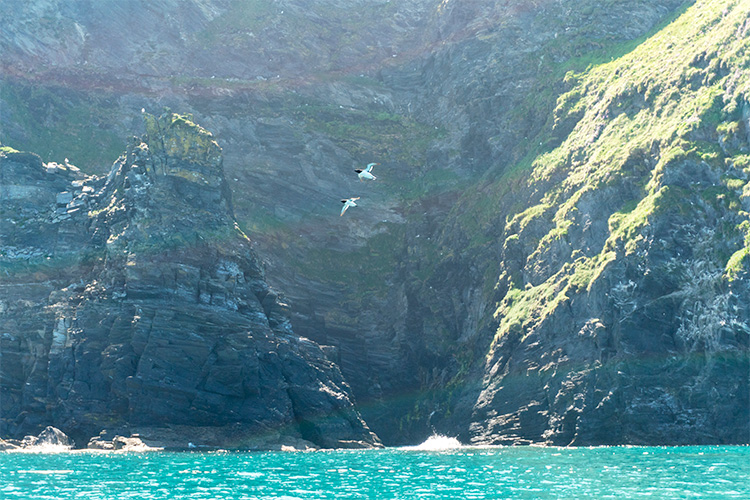
Razorbills On The Cliffs North of Port Gaverne
We are so lucky to be able to get out and share this incredible environment with so many of you. And despite all of the threats and pressures that our ocean and the species that rely on it are facing, there’s nothing quite so good at prompting action than spending time enjoying the wonders of the natural world.
Seabird season is starting here on the coast of Cornwall. We love seeing and hearing them all as we paddle up and down the coast, and we hope that their decline can be slowed and reversed so that in future years we can enjoy an even greater abundance of life on our cliffs and in the waters beneath them.
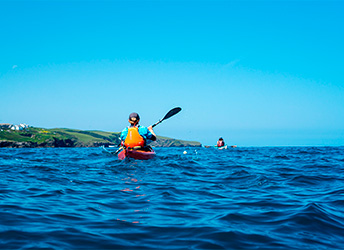
Visiting Cornwall this spring or summer? Come sea kayaking with us and see what you can see.